
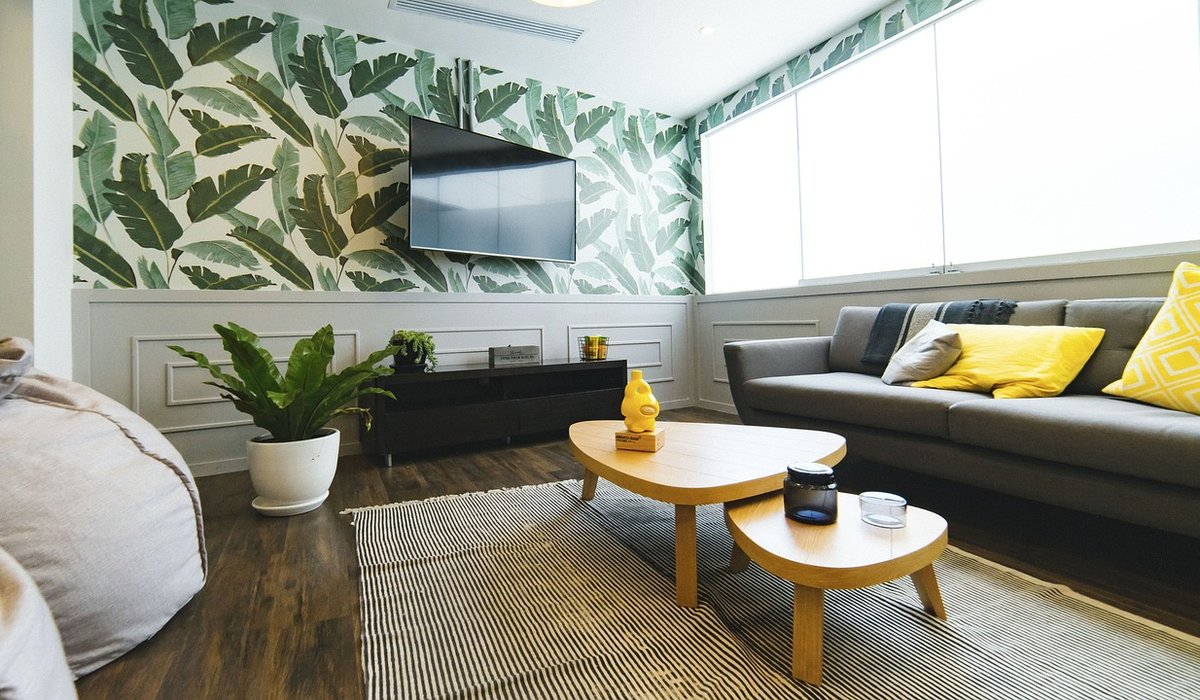
How to Create a Cosy Reading Nook in a Small Room
Start With the Spot You Already Have
Most homes have one: the corner behind the door, the awkward gap beside the chimney breast, the strip of wall between the window and the wardrobe. Rather than waiting for a spare room to appear, treat one of these overlooked patches as your reading retreat. A reading nook needs surprisingly little floor space — a footprint of roughly one metre square is enough for a chair, a slim side table and a lamp, provided you plan it properly.
Before you move a single cushion, stand in the space and ask yourself a few practical questions:
- Is there a natural light source? A spot near a window gives you daytime reading without switching anything on, but avoid sitting directly in a draught or in full glare.
- Can you see the door? We relax more easily when we are not facing a wall with our back to the room. It is a small thing, but it makes a nook feel calm rather than cramped.
- Is there a socket nearby? You will want one for a lamp, and possibly another for charging a phone or a pair of headphones.
- What is the through-traffic like? A corner people walk past constantly will never feel restful. Aim for somewhere slightly tucked away.
Measure the space honestly. Width matters more than depth: you need enough room for the chair to sit clear of the wall without blocking a doorway or stealing the walking route through the room.
Choose a Chair You Actually Want to Sit In
The chair is the anchor of the whole arrangement, so it deserves the largest share of your budget and your attention. A compact armchair with a high back and supportive arms will cradle you for an hour or more; a decorative dining chair will not. Look for a seat height of around 45 centimetres, which suits most adults, and check that your feet rest flat on the floor or on a small footstool.
- Wing chairs and tub chairs suit tight corners because their curved backs tuck neatly into angles.
- Swivel chairs work well in the middle of a room, letting you turn towards the light or the fire.
- Footstools earn their keep in small rooms — many have storage inside for books and blankets.
- Slipcovers are worth considering if the nook sits beside a radiator or in a sunny spot.
If the room is genuinely tiny, a comfortable upholstered chair on castors can be wheeled out of the way when guests arrive. Test the depth as well as the width: a deep chair may look inviting but leave you unable to reach your tea.
Layer Your Lighting Like a Professional
Harsh overhead light flattens a room and makes any corner feel like an afterthought. Cosy lighting comes in layers, and in a reading nook you need three: a warm pool of light for the page, a softer glow for the room, and something low and ambient for the evening.
- A floor lamp or wall light positioned over your shoulder, not in front of you, so the light falls on the book rather than in your eyes.
- A bulb around 2700K — warm white — with a decent brightness of 400 to 600 lumens. Cool daylight bulbs will kill the mood instantly.
- A dimmer switch or smart bulb so you can drop the level as the evening draws in.
- A small table lamp on the side table, ideally with a fabric or opal shade that softens the light.
- A candle or two, if you are happy with an open flame, for the last hour before bed.
Position the lamp so the shade sits roughly at eye level when you are seated. That single adjustment prevents the glare that makes reading tiring.
Soften Everything With Texture
Comfort is as much about touch as it is about sight. A chair on its own reads as furniture; the same chair with a throw across the arm and a couple of cushions reads as an invitation. Choose textiles in tones that sit close to the rest of the room so the nook feels like part of the scheme rather than a bolt-on.
- A throw of about 130 by 170 centimetres is the sweet spot — big enough to cover your lap and shoulders, small enough not to swamp a compact chair.
- Two cushions is usually plenty: a 45-centimetre square for your back and a smaller rectangular one for extra support.
- Mix weights — a chunky wool or cotton weave over a fine linen cushion gives depth without clutter.
- Add a rug if the floor is bare. Even a small one underfoot signals that this corner is a separate, gentler zone.
Keep a basket beside the chair for the throw when you are not using it. It looks tidy, and it means you can actually reach the blanket rather than admiring it folded on a shelf.
The Details That Make It Work
A reading nook lives or dies on the small things within arm's reach. You should be able to sit down with a book and a mug and not need to get up again for at least an hour.
- A side table about 40 centimetres wide, tall enough that the surface sits just below the chair arm.
- A coaster and a lidded mug — practical insurance against a tipped cup of tea.
- A slim bookshelf or a stack of books on the floor, with the next two or three titles you plan to read close by.
- A reading light that clips to the book if you share the room and do not want to disturb anyone.
- A small clock or a phone on silent, so you are not reaching for a screen every five minutes.
Making a Small Room Feel Spacious
In a genuinely tight room, a few tricks stop the nook from feeling like a cupboard. Keep the colour palette calm and continuous — walls, chair and textiles in related tones make the corner recede rather than crowd. Choose furniture with visible legs so you can see floor beneath it, which always reads as more space.
Hang a mirror on the opposite wall to bounce the lamp light back into the room, and keep the shelf above the chair shallow — 15 to 20 centimetres deep is plenty for paperbacks. Finally, resist the urge to fill every surface. A little empty space is what allows a corner to feel restful, and restful is the entire point.
tag: Interiors

Eleanor Fairfax Author
Learn how to make a simple starter, shape a loaf and bake crusty bread without specialist equipment in your own kitchen.
YOU MAY ALSO LIKE
A Beginner's Guide to Baking Sourdough at Home
Sep 20
10Give tired wooden pieces a fresh look using chalk paint, gentle sanding and a protective wax finish that suits any room.
read more
Upcycling Old Furniture with Chalk Paint and Wax
Sep 16
10Use dried leaves, candlelight and simple linen to create a welcoming table that celebrates the harvest without spending a fortune.
read moreInteriors
-

ERRIC CATONA
Clever storage, slim appliances and vertical shelving can help a narrow kitchen feel practical, airy and easy to cook in.
May 19, 2016 at 5.12 pm
Reply
ERRIC CATONA
Sort belongings into keep, donate and repair piles, then give every remaining item a clear home to maintain a peaceful space.
May 19, 2016 at 5.12 pm
Reply -
ERRIC CATONA
Insulate walls, add generous glazing and choose durable flooring to make a garden room comfortable in every season.
May 19, 2016 at 5.12 pm
Reply
Home Cooking
Your email address will not be published.